1. Home
  2. Nutrients
  3. Vitamin D
Fat-soluble vitamin

Vitamin D, the sunshine vitamin

Vitamin D is a fat-soluble vitamin your liver and kidneys turn into an active form, calcitriol, which helps your gut absorb calcium for bones, muscles and nerves1.

VitaminsTracked in mcgDaily target4 sources · checked 2026-09-27

How much you need

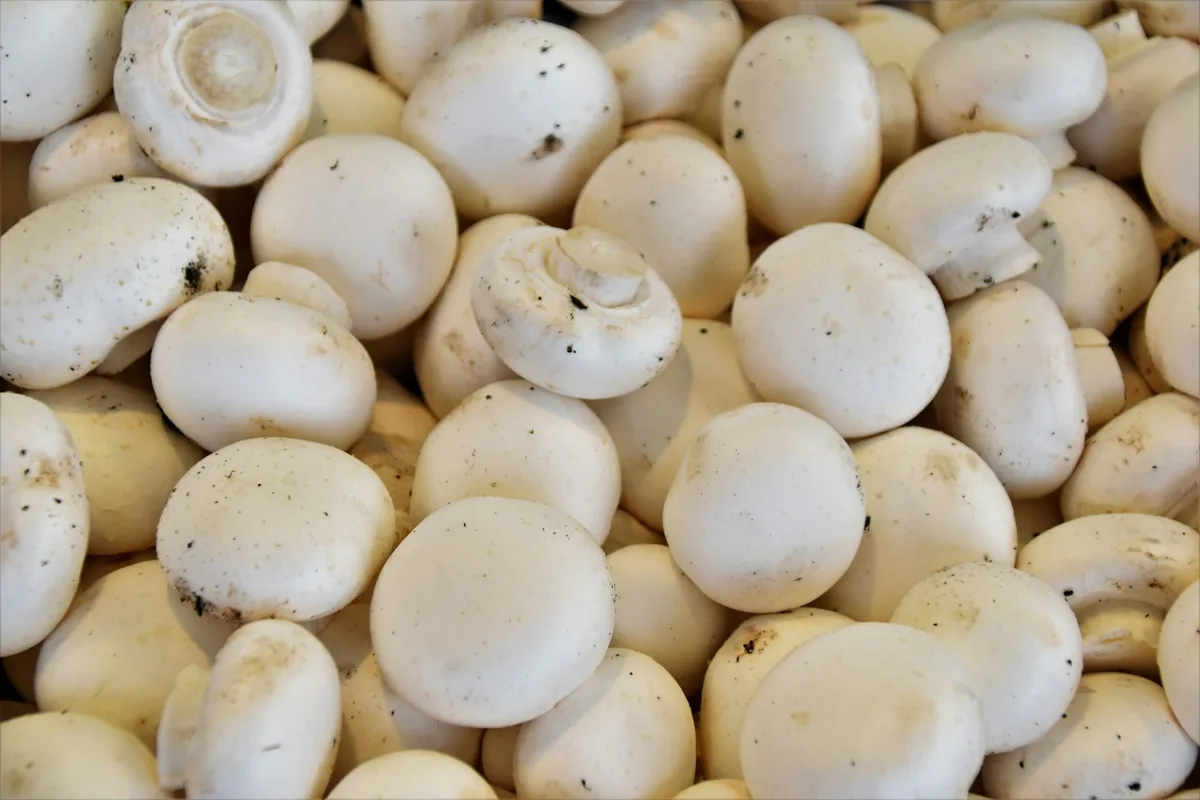
A pile of fresh white button mushrooms at a market
Photo: Waldemar Brandt on Unsplash (Unsplash License)
01 What it does

What vitamin D does for you.

Calcium absorption

Helps your body absorb calcium, one of the main building blocks of strong bones2.

Bone growth & remodelling

Keeps calcium and phosphate available for normal bone mineralisation, growth and remodelling1.

Muscle movement

Your muscles need vitamin D to move2.

Nerve signals

Your nerves need it to carry messages between your brain and your body2.

Immune function

Your immune system needs vitamin D to fight off invading bacteria and viruses2.

02 How your body uses it

How your body uses vitamin D.

How your body uses vitamin D: Sun (UVB) → Skin → Vitamin D₃ → Liver → Kidney → Calcitriol → Small intestine → Bone & muscle. PTH when calcium is low Kidney.01Sun (UVB)Reaches bare skin02Skin7-dehydrocholesterol03Vitamin D₃Cholecalciferol04Liver25(OH)D, main blood form05Kidney1α-hydroxylase06Calcitriol1,25(OH)₂D, active form07Small intestine↑ calcium absorption08Bone & muscleMineralisation &functionPTHParathyroid hormonewhen calcium is lowHow your body uses vitamin D: Sun (UVB) → Skin → Vitamin D₃ → Liver → Kidney → Calcitriol → Small intestine → Bone & muscle. PTH when calcium is low Kidney.01Sun (UVB)Reaches bare skin02Skin7-dehydrocholesterol03Vitamin D₃Cholecalciferol04Liver25(OH)D, main blood form05Kidney1α-hydroxylasePTHParathyroidhormone06Calcitriol1,25(OH)₂D, active form07Small intestine↑ calcium absorption08Bone & muscleMineralisation & function

Vitamin D from sun, food or supplements is inactive until the liver makes 25(OH)D (calcidiol) and the kidney makes calcitriol1. When blood calcium falls, parathyroid hormone boosts kidney activation, and calcitriol raises calcium absorption in the gut4.

03 Where to get it

Foods and other sources.

UV-exposed mushroomsFortified milkFortified soy milkFortified oat milkFortified cerealFortified yogurtSalmonTroutTunaEgg yolk

Vegetarian

Food and servingAmount
Mushrooms, white, UV-exposed, ½ cup366 IU
Soy, almond or oat milk, fortified, 1 cup100–144 IU
Milk, 2%, vitamin D fortified, 1 cup120 IU
Ready-to-eat cereal, fortified, 1 serving80 IU
Yogurt, fortified (varies by brand)—

Non-vegetarian

Food and servingAmount
Trout (rainbow), farmed, cooked, 3 oz645 IU
Salmon (sockeye), cooked, 3 oz570 IU
Sardines, canned in oil, 2 sardines46 IU
Egg, 1 large (vitamin D is in the yolk)44 IU
Tuna, light, canned in water, 3 oz40 IU

Very few foods naturally contain vitamin D and fortification varies by product, so check the Nutrition Facts label2. Amounts per serving from1.

Sunlight (UVB)

No single minutes-of-sun rule: output varies with season, skin tone, age and sunscreen, and UVB doesn't pass through window glass1.

Fortified foods

Most U.S. milk and many soy, almond and oat milks are fortified, as are many cereals and some yogurts2.

Supplements (D₂ or D₃)

Both raise blood levels; D₃ tends to raise them more and for longer. Animal-free D₃ from lichen exists1.

04 How much you need

Your daily reference amounts.

The same reference table draws the reference lines on your charts in Ayuvo. Needs differ in pregnancy and breastfeeding, which are not covered here.

Vitamin D: daily RDA by age and sex
AgeWomenMenUpper limit
19–3015 mcg (600 IU)15 mcg (600 IU)100 mcg (4,000 IU)
31–5015 mcg (600 IU)15 mcg (600 IU)100 mcg (4,000 IU)
51–7015 mcg (600 IU)15 mcg (600 IU)100 mcg (4,000 IU)
71+20 mcg (800 IU)20 mcg (800 IU)100 mcg (4,000 IU)

RDA (Recommended Dietary Allowance) is the daily amount that meets the needs of nearly all healthy people. Per day, for adults1.

Upper limit (UL) is the most per day that is unlikely to cause harm. Applies to food, drinks and supplements combined.

  • 1 mcg of vitamin D equals 40 IU.
Vitamin D reference amounts for adults aged 31–50: RDA 15 mcg; Upper limit 100 mcgRDA 15 mcgUpper limit 100 mcg0Adults 31–50, per day
Below the recommended amountRecommended rangeAbove the upper limit
05 Balance

Too little, too much.

Signs like these have many possible causes. They are a reason to talk to a clinician, not to self-treat.

Too little

Low vitamin D causes rickets in children and osteomalacia in teens and adults, with bone pain and muscle weakness2.

  • Bone pain
  • Muscle weakness
  • Soft, weak bones (osteomalacia)
  • Rickets in children
  • Fragile bones over time

Too much

Too much, almost always from supplements, can push blood levels very high, and extreme levels can cause kidney failure and irregular heartbeat2.

  • Nausea and vomiting
  • Loss of appetite
  • Muscle weakness
  • Confusion
  • Excess thirst and urination
  • Kidney stones
06 Blood test

25-hydroxyvitamin D [25(OH)D].

25(OH)D is the main blood marker of vitamin D status; the active form, 1,25(OH)₂D, is not a good status marker1. An Indian expert consensus uses somewhat different categories, so read results with your lab's ranges and a clinician3.

25(OH)DWhat it may mean
< 12 ng/mL (< 30 nmol/L)Deficiency risk
12–20 ng/mL (30–50 nmol/L)Potential inadequacy
≥ 20 ng/mL (≥ 50 nmol/L)Adequate for most people
> 50 ng/mL (> 125 nmol/L)Potentially associated with adverse effects

Labs use different units and ranges. Your clinician reads a result alongside your history and other tests.

07 Supplements

Supplement forms.

Supplements contain vitamin D₂ or D₃, and because vitamin D is fat-soluble it is absorbed well with a meal or snack that contains some fat2.

Vitamin D₃ (cholecalciferol)

Raises blood 25(OH)D more and keeps it higher for longer than D₂ in most studies1.

Vitamin D₂ (ergocalciferol)

Made by UV-irradiating ergosterol from yeast; also raises blood 25(OH)D1.

Vegan D₃ (from lichen)

Most D₃ is made from sheep's-wool lanolin; animal-free D₃ from lichen is also available1.

Supplements can interact with medicines. Talk to a clinician or pharmacist before you start one, especially at high doses.

08 Key points

Remember these five.

  1. Vitamin D₃ is the form your skin makes and a common supplement form.
  2. 25(OH)D is the main circulating form and the blood test used to check vitamin D status.
  3. Calcitriol, 1,25(OH)₂D, is the active hormone form.
  4. Its classic job: help your gut absorb calcium to support bones and muscles.
  5. If you suspect low vitamin D, test 25(OH)D rather than guessing from symptoms.
FAQ

Questions about vitamin D.

Can I get enough vitamin D from sunlight alone?

Your skin makes vitamin D from UVB light, but how much depends on season, time of day, skin tone, age, clouds, smog and sunscreen, and sunlight through window glass doesn't count. That's why there is no single reliable minutes-of-sun rule, and UV exposure also raises skin cancer risk.

Is vitamin D₃ better than D₂?

Both forms raise blood 25(OH)D, but most evidence shows D₃ raises it more and keeps it higher for longer. If you avoid animal products, look for D₃ sourced from lichen or check the source with the manufacturer.

Are high-dose weekly vitamin D capsules an everyday supplement?

No. High-dose weekly regimens are treatment protocols that a clinician sets for a limited period, usually after a blood test shows low 25(OH)D, and then monitors. They are not meant as an everyday supplement, and routine intake should stay within the upper limit on this page.

Get started

Track vitamin D in Ayuvo.

Ayuvo charts vitamin D by day, week, month and year, with the reference lines from this page, personalised by age and sex where they differ. Supplements you log in Medications count too. Free, with no account.

Coming soon to the App StoreComing soon to Google Play

Or read the code: Ayuvo is open source

Sources

Facts on this page come from these sources, checked on the dates shown. Intake numbers come from Ayuvo's shared reference table, which cites the sources marked for them.

  1. Vitamin D: Fact Sheet for Health Professionals · NIH Office of Dietary Supplements checked 2026-09-27
  2. Vitamin D: Fact Sheet for Consumers · NIH Office of Dietary Supplements checked 2026-09-27
  3. Prevention and Treatment of Vitamin D Deficiency in India: An Expert Group Consensus · Indian Journal of Endocrinology and Metabolism (PMC) checked 2026-09-27
  4. Systemic versus local regulation of vitamin D · Current Opinion in Nephrology and Hypertension (PMC) checked 2026-09-27

General information, not medical advice. This guide is for healthy adults and does not cover pregnancy, breastfeeding, children or medical conditions. It cannot diagnose or treat anything. Talk to a clinician before starting high-dose supplements, or if you think you may have too little or too much of a nutrient. Spotted an error? Email us.