1. Home
  2. Nutrients
  3. Thiamin
Water-soluble B vitamin (B1)

Thiamin, the energy starter

Thiamin, or vitamin B1, is a water-soluble vitamin with a critical role in energy metabolism, and so in the growth, development and function of cells1.

VitaminsTracked in mgDaily target2 sources · checked 2026-09-27

How much you need

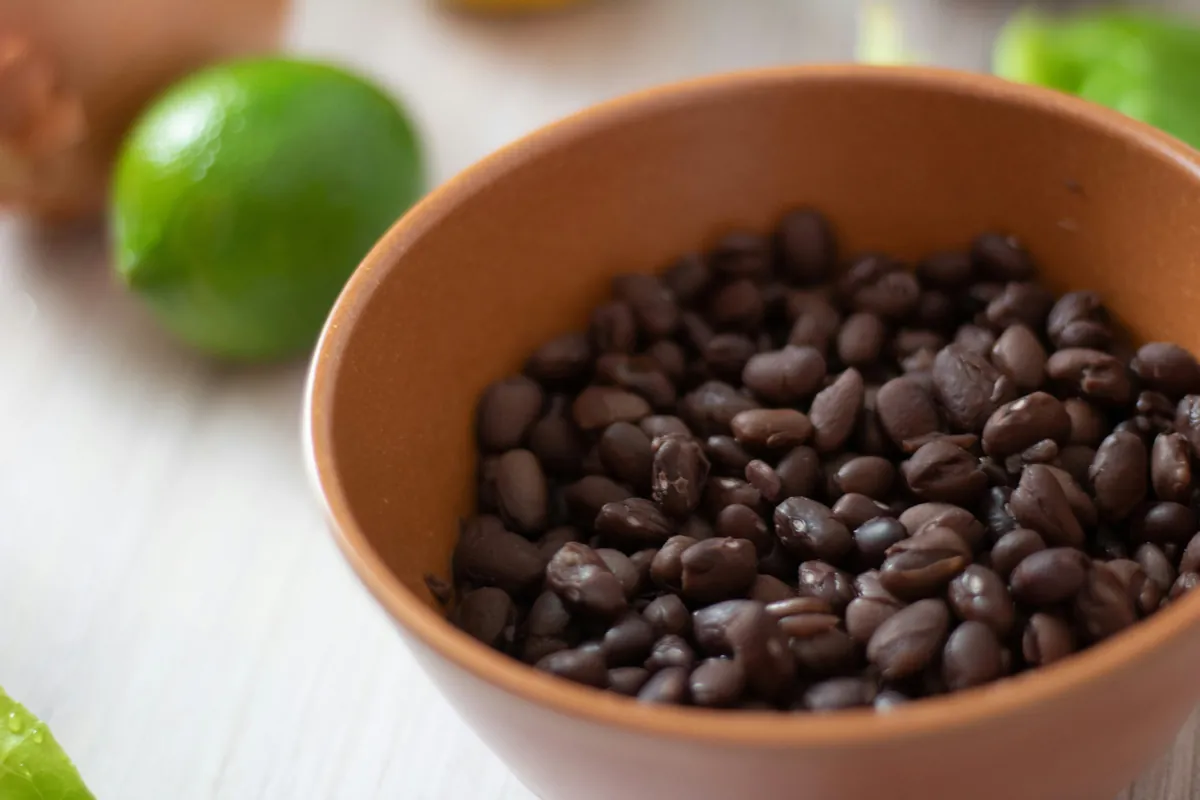
A terracotta bowl of black beans beside fresh limes
Photo: Mikey Frost on Unsplash (Unsplash License)
01 What it does

What thiamin does for you.

Energy from food

Its active form, thiamin diphosphate (TDP), is a cofactor for five enzymes in glucose, amino acid and fat metabolism1.

Cell growth

Needed for the growth, development and function of cells1.

Nerves

Deficiency (beriberi) mainly damages peripheral nerves, impairing sensory, motor and reflex function1.

Heart

Early deficiency can bring cardiovascular symptoms such as an enlarged heart1.

Brain & memory

Severe deficiency is linked with Wernicke-Korsakoff syndrome, which affects memory and orientation1.

02 How your body uses it

How your body uses thiamin.

How your body uses thiamin: Food thiamin → Small intestine → Absorption → Cells → Enzymes at work → Kidneys. High doses diffuse in Absorption.01Food thiaminMostly phosphorylated forms02Small intestinePhosphatases free thiamin03AbsorptionActive transport at food doses04CellsPyrophosphokinase makes TDP05Enzymes at workGlucose, amino acid, fat use06KidneysExcess leaves in urineHigh dosesAbsorbed by passive diffusiondiffuse inHow your body uses thiamin: Food thiamin → Small intestine → Absorption → Cells → Enzymes at work → Kidneys. High doses diffuse in Absorption.01Food thiaminMostly phosphorylatedforms02Small intestinePhosphatases free thiamin03AbsorptionActive transport at fooddosesHigh dosesAbsorbed bypassivediffusion04CellsPyrophosphokinase makesTDP05Enzymes at workGlucose, amino acid, fatuse06KidneysExcess leaves in urine

Intestinal phosphatases free thiamin from its phosphorylated food forms, and it is absorbed by active transport at food doses and by passive diffusion at high doses1. In cells, thiamin pyrophosphokinase turns it into TDP, the cofactor of enzymes such as pyruvate dehydrogenase and transketolase2. The body stores only small amounts, mainly in the liver, and excretes the excess in urine1.

03 Where to get it

Foods and other sources.

Fortified cerealEnriched breadBlack beansPorkTroutMusselsBrown riceWhole-wheat pastaSunflower seeds

Vegetarian

Food and servingAmount
Breakfast cereal, fortified with 100% of the DV, 1 serving1.2 mg
Egg noodles, enriched, cooked, 1 cup0.5 mg
Black beans, boiled, ½ cup0.4 mg
English muffin, plain, enriched, 10.3 mg
Macaroni, whole wheat, cooked, 1 cup0.2 mg
Acorn squash, baked, ½ cup0.2 mg
Brown rice, not enriched, cooked, ½ cup0.2 mg
Sunflower seeds, toasted, 1 oz0.1 mg

Non-vegetarian

Food and servingAmount
Pork chop, bone in, broiled, 3 oz0.4 mg
Trout, cooked, 3 oz0.4 mg
Mussels, blue, cooked, 3 oz0.3 mg
Tuna, bluefin, cooked, 3 oz0.2 mg
Beef steak, bottom round, braised, 3 oz0.1 mg

Heat and cooking water cut thiamin: bread has 20–30% less than its raw ingredients, and unless white rice is enriched it has a tenth of the thiamin in brown rice1. Amounts per serving from1.

Enriched grains

Breads, cereals and infant formulas are fortified in the U.S. and many other countries, and about half of U.S. thiamin intake comes from added thiamin1.

Supplements

Multivitamins usually include thiamin, and B-complex and thiamin-only products are also sold1.

Small stores

The body stores little thiamin, mainly in the liver, and it has a short half-life, so it needs a steady supply from food1.

04 How much you need

Your daily reference amounts.

The same reference table draws the reference lines on your charts in Ayuvo. Needs differ in pregnancy and breastfeeding, which are not covered here.

Thiamin: daily RDA by age and sex
AgeWomenMen
19–301.1 mg1.2 mg
31–501.1 mg1.2 mg
51–701.1 mg1.2 mg
71+1.1 mg1.2 mg

RDA (Recommended Dietary Allowance) is the daily amount that meets the needs of nearly all healthy people. Per day, for adults1.

  • No upper limit is set because no adverse effects from high intakes from food or supplements have been reported.
Thiamin reference amounts for adults aged 31–50: Women 1.1 · Men 1.2 mgWomen 1.1 · Men 1.2 mg0Adults 31–50, per day
Below the recommended amountMeets the reference
05 Balance

Too little, too much.

Signs like these have many possible causes. They are a reason to talk to a clinician, not to self-treat.

Too little

Deficiency can come from low intake or from poor absorption or higher losses, for example with alcohol dependence, some medicines or bariatric surgery1.

  • Weight loss and poor appetite
  • Confusion and short-term memory loss
  • Muscle weakness
  • Enlarged heart
  • Nerve damage and wasting (beriberi)
  • Wernicke-Korsakoff syndrome

Too much

No upper limit is set because no adverse effects have been reported from high intakes from food or supplements; the body excretes the excess in urine1.

  • No upper limit set
  • Excess leaves in urine
  • Absorption falls at high intakes
  • Harm from excess still not ruled out
06 Blood test

Erythrocyte transketolase activity (TDP effect).

Blood thiamin levels are not reliable status markers, so status is often measured indirectly by the activity of transketolase, a TDP-dependent enzyme in red blood cells, with and without added TDP1.

TDP effectWhat it may mean
0–15%Typical in healthy people
15–25%Marginal deficiency
Above 25%Deficiency

Labs use different units and ranges. Your clinician reads a result alongside your history and other tests.

07 Supplements

Supplement forms.

Thiamin is in many multivitamins and B-complex products; the most common forms are thiamin mononitrate and thiamin hydrochloride1.

Thiamin mononitrate

A stable, water-soluble form widely used in supplements1.

Thiamin hydrochloride

Also stable and water soluble, and one of the two most common forms1.

Benfotiamine

A synthetic derivative that is not water soluble and is converted to thiamin in the body1.

Supplements can interact with medicines. Talk to a clinician or pharmacist before you start one, especially at high doses.

08 Key points

Remember these five.

  1. Thiamin (vitamin B1) helps the body use carbohydrate, fat and protein for energy.
  2. The body stores little thiamin, so a steady supply from food matters.
  3. Whole grains, enriched breads and cereals, pork, fish and beans are good sources.
  4. Heat and discarded cooking water reduce the thiamin in food.
  5. Alcohol dependence, bariatric surgery and some diuretics are linked with low thiamin.
FAQ

Questions about thiamin.

What is beriberi?

Beriberi is the classic result of thiamin deficiency. It mainly causes nerve damage and muscle wasting, with problems in sensation, movement and reflexes, and in rare cases heart failure. It is rare where breads and cereals are enriched, but it still occurs.

Why is alcohol linked with low thiamin?

Alcohol reduces how much thiamin the gut absorbs, lowers liver stores and interferes with turning thiamin into its active form, and people with alcohol dependence often eat too little. Chronic alcohol use is the most common cause of thiamin deficiency in industrialized countries.

Does brown rice have more thiamin than white rice?

Yes. Processing lowers thiamin, so unenriched white rice has about a tenth of the thiamin in brown rice. Enriched white rice has thiamin added back, though in U.S. food tables a serving still has less than brown rice.

Get started

Track thiamin in Ayuvo.

Food logging does not estimate thiamin, so Ayuvo tracks it from supplements you log in Medications, and from Apple Health on iPhone or Health Connect on Android when another app saves it there. Charts by day, week, month and year use the reference lines from this page, personalised by age and sex where they differ. Free, with no account.

Coming soon to the App StoreComing soon to Google Play

Or read the code: Ayuvo is open source

Sources

Facts on this page come from these sources, checked on the dates shown. Intake numbers come from Ayuvo's shared reference table, which cites the sources marked for them.

  1. Thiamin: Fact Sheet for Health Professionals · NIH Office of Dietary Supplements checked 2026-09-27
  2. Low expression of thiamine pyrophosphokinase-1 contributes to brain susceptibility to thiamine deficiency (Xia Y et al. Neuroreport, 2024) · PubMed Central checked 2026-09-27

General information, not medical advice. This guide is for healthy adults and does not cover pregnancy, breastfeeding, children or medical conditions. It cannot diagnose or treat anything. Talk to a clinician before starting high-dose supplements, or if you think you may have too little or too much of a nutrient. Spotted an error? Email us.