1. Home
  2. Nutrients
  3. Vitamin B6
Water-soluble B vitamin

Vitamin B6, the enzyme helper

Vitamin B6 is a water-soluble vitamin whose coenzyme forms take part in more than 100 enzyme reactions, mostly in protein metabolism, and support brain, blood and immune function1.

VitaminsTracked in mgDaily target4 sources · checked 2026-09-27

How much you need

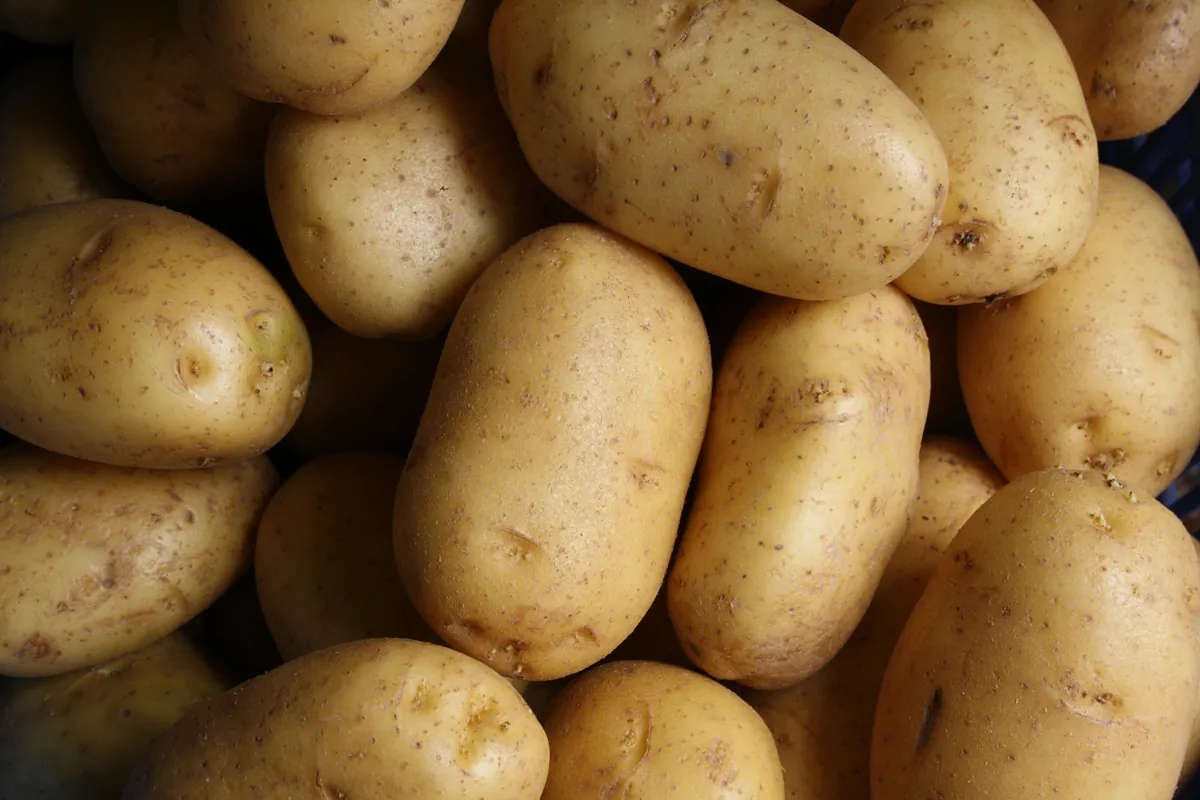
A heap of raw yellow potatoes with dusty skins
Photo: Lars Blankers on Unsplash (Unsplash License)
01 What it does

What vitamin B6 does for you.

Protein metabolism

Its coenzyme forms, PLP and PMP, run more than 100 enzyme reactions, mostly in amino acid and protein metabolism1.

Brain messengers

Needed to make neurotransmitters such as serotonin and dopamine, which plays a role in cognitive development13.

Immune function

Involved in immune function, for example by promoting lymphocyte and interleukin-2 production1.

Hemoglobin

Involved in forming hemoglobin, the protein in red blood cells that carries oxygen1.

Glucose supply

Takes part in releasing glucose from glycogen and in making new glucose (gluconeogenesis)1.

02 How your body uses it

How your body uses vitamin B6.

How your body uses vitamin B6: Food B6 → Jejunum → Liver → Bloodstream → Cells → Enzymes at work → Kidneys01Food B6Pyridoxine, pyridoxal,pyridoxamine02JejunumAbsorbed by passivediffusion03LiverKinase makes active PLP04BloodstreamPLP carried on albumin05CellsTake up B6, rebuild PLP06Enzymes at work100+ reactions, most inprotein07KidneysLeaves as 4-pyridoxicacidHow your body uses vitamin B6: Food B6 → Jejunum → Liver → Bloodstream → Cells → Enzymes at work → Kidneys01Food B6Pyridoxine, pyridoxal, pyridoxamine02JejunumAbsorbed by passive diffusion03LiverKinase makes active PLP04BloodstreamPLP carried on albumin05CellsTake up B6, rebuild PLP06Enzymes at work100+ reactions, most in protein07KidneysLeaves as 4-pyridoxic acid

Phosphorylated food forms are split and free vitamin B6 is absorbed by passive diffusion in the jejunum1. Pyridoxal kinase turns it into PLP, which travels in plasma bound to albumin; much of the body's PLP sits in muscle bound to glycogen phosphorylase, and 4-pyridoxic acid is the main form in urine2. PLP is dephosphorylated before it enters cells3.

03 Where to get it

Foods and other sources.

ChickpeasPotatoesBananasTunaSalmonChickenTurkeyFortified cerealWinter squash

Vegetarian

Food and servingAmount
Chickpeas, canned, 1 cup1.1 mg
Potatoes, boiled, 1 cup0.4 mg
Banana, 1 medium0.4 mg
Breakfast cereal, fortified with 25% of the DV, 1 serving0.4 mg
Marinara sauce, ready to serve, 1 cup0.4 mg
Bulgur, cooked, 1 cup0.2 mg
Cottage cheese, 1% low fat, 1 cup0.2 mg
Winter squash, baked, ½ cup0.2 mg

Non-vegetarian

Food and servingAmount
Beef liver, pan fried, 3 oz0.9 mg
Tuna, yellowfin, cooked, 3 oz0.9 mg
Salmon, sockeye, cooked, 3 oz0.6 mg
Chicken breast, roasted, 3 oz0.5 mg
Turkey, meat only, roasted, 3 oz0.4 mg
Ground beef, 85% lean, broiled, 3 oz0.3 mg

About 75% of the vitamin B6 in a mixed diet is bioavailable; much of the pyridoxine in fruit, vegetables and grains is in glycosylated forms that are absorbed less well1. Amounts per serving from1.

Fortified cereals

In the U.S., adults get most of their vitamin B6 from fortified cereals, beef, poultry, starchy vegetables and some noncitrus fruits1.

Supplements

Found in multivitamins, B-complex products and B6-only supplements; about 28–36% of people use a supplement that contains it1.

Stored in muscle

Much of the body's PLP is held in muscle, bound to the enzyme glycogen phosphorylase2.

04 How much you need

Your daily reference amounts.

The same reference table draws the reference lines on your charts in Ayuvo. Needs differ in pregnancy and breastfeeding, which are not covered here.

Vitamin B6: daily RDA by age and sex
AgeWomenMenUpper limit
19–301.3 mg1.3 mg100 mg
31–501.3 mg1.3 mg100 mg
51–701.5 mg1.7 mg100 mg
71+1.5 mg1.7 mg100 mg

RDA (Recommended Dietary Allowance) is the daily amount that meets the needs of nearly all healthy people. Per day, for adults1.

Upper limit (UL) is the most per day that is unlikely to cause harm. Applies to food, drinks and supplements combined.

  • In 2023 the European Food Safety Authority set a lower upper limit of 12 mg a day for adults.
Vitamin B6 reference amounts for adults aged 31–50: RDA 1.3 mg; Upper limit 100 mgRDA 1.3 mgUpper limit 100 mg0Adults 31–50, per day
Below the recommended amountRecommended rangeAbove the upper limit
05 Balance

Too little, too much.

Signs like these have many possible causes. They are a reason to talk to a clinician, not to self-treat.

Too little

Isolated vitamin B6 deficiency is uncommon; low B6 usually comes with low levels of other B vitamins such as B12 and folic acid1.

  • Microcytic anemia
  • Scaly lips and cracks at the mouth corners
  • Swollen tongue (glossitis)
  • Depression and confusion
  • Weakened immune function

Too much

Vitamin B6 from food has not been linked with harm, but long-term high-dose pyridoxine supplements can cause sensory nerve damage; nerve damage is also the basis of the 2023 European upper limit14.

  • Sensory nerve damage (neuropathy)
  • Loss of control of body movements (ataxia)
  • Painful skin lesions
  • Sensitivity to sunlight
  • Nausea and heartburn
06 Blood test

Plasma pyridoxal 5'-phosphate (PLP).

Plasma PLP is the most common measure of vitamin B6 status; B6 can also be measured in red blood cells or urine, or indirectly through enzyme and tryptophan tests1.

Plasma PLPWhat it may mean
Above 30 nmol/LTraditional sign of adequate status in adults
Below 20 nmol/LLow; 20 nmol/L is the adequacy cutoff used to set the recommended amounts

Labs use different units and ranges. Your clinician reads a result alongside your history and other tests.

07 Supplements

Supplement forms.

Supplements most often contain pyridoxine hydrochloride, and absorption from supplements is similar to food and does not differ much between forms1.

Pyridoxine hydrochloride

The most common B6 form in supplements; the body absorbs large doses well but quickly removes most of it in the urine1.

Pyridoxal 5'-phosphate (PLP)

The active coenzyme form, used in some supplements1.

Tablets, capsules and liquids

Sold as capsules, tablets (including sublingual and chewable ones) and liquids1.

Supplements can interact with medicines. Talk to a clinician or pharmacist before you start one, especially at high doses.

08 Key points

Remember these five.

  1. Vitamin B6 is a group of six related compounds; PLP is the main active form.
  2. Chickpeas, fish, poultry, potatoes and noncitrus fruit such as bananas are good sources.
  3. Low vitamin B6 usually shows up alongside low levels of other B vitamins.
  4. Plasma PLP is the most common measure of vitamin B6 status.
  5. Long-term high-dose supplements, not food, are linked with nerve damage.
FAQ

Questions about vitamin B6.

Can you get too much vitamin B6 from supplements?

Vitamin B6 from food has not been reported to cause problems. Taking high doses of pyridoxine for months or years can damage sensory nerves and affect control of body movements, and symptoms usually stop if the supplement is stopped early. In 2023 the European Food Safety Authority set a lower upper limit than the U.S. one, based on nerve damage.

Does vitamin B6 lower heart disease risk?

Vitamin B6, folic acid and vitamin B12 can lower homocysteine, but most large trials found that B vitamin supplements did not reduce heart attacks or strokes. So far there is little evidence that vitamin B6 supplements lower cardiovascular risk.

Who is more likely to have low vitamin B6?

Low vitamin B6 is more common in people with kidney disease, autoimmune conditions such as rheumatoid arthritis or celiac disease, and alcohol dependence. Some antiepileptic medicines can also lower it over time.

Get started

Track vitamin B6 in Ayuvo.

Food logging does not estimate vitamin B6, so Ayuvo tracks it from supplements you log in Medications, and from Apple Health on iPhone or Health Connect on Android when another app saves it there. Charts by day, week, month and year use the reference lines from this page, personalised by age and sex where they differ. Free, with no account.

Coming soon to the App StoreComing soon to Google Play

Or read the code: Ayuvo is open source

Sources

Facts on this page come from these sources, checked on the dates shown. Intake numbers come from Ayuvo's shared reference table, which cites the sources marked for them.

  1. Vitamin B6: Fact Sheet for Health Professionals · NIH Office of Dietary Supplements checked 2026-09-27
  2. Dietary Reference Intakes for Thiamin, Riboflavin, Niacin, Vitamin B6, Folate, Vitamin B12, Pantothenic Acid, Biotin, and Choline (1998), chapter 7: Vitamin B6 · National Academies of Sciences, Engineering, and Medicine checked 2026-09-27
  3. Vitamin B6 and Its Role in Cell Metabolism and Physiology (Parra M et al. Cells, 2018) · PubMed Central checked 2026-09-27
  4. Scientific opinion on the tolerable upper intake level for vitamin B6 (EFSA Journal, 2023) · European Food Safety Authority (PubMed Central) checked 2026-09-27

General information, not medical advice. This guide is for healthy adults and does not cover pregnancy, breastfeeding, children or medical conditions. It cannot diagnose or treat anything. Talk to a clinician before starting high-dose supplements, or if you think you may have too little or too much of a nutrient. Spotted an error? Email us.