1. Home
  2. Nutrients
  3. Selenium
Trace mineral

Selenium, for the thyroid and cell defence

Selenium is an essential mineral built into selenoproteins, which play critical roles in thyroid hormone metabolism, DNA synthesis, reproduction and protection from oxidative damage and infection1.

MineralsTracked in mcgDaily target3 sources · checked 2026-09-27

How much you need

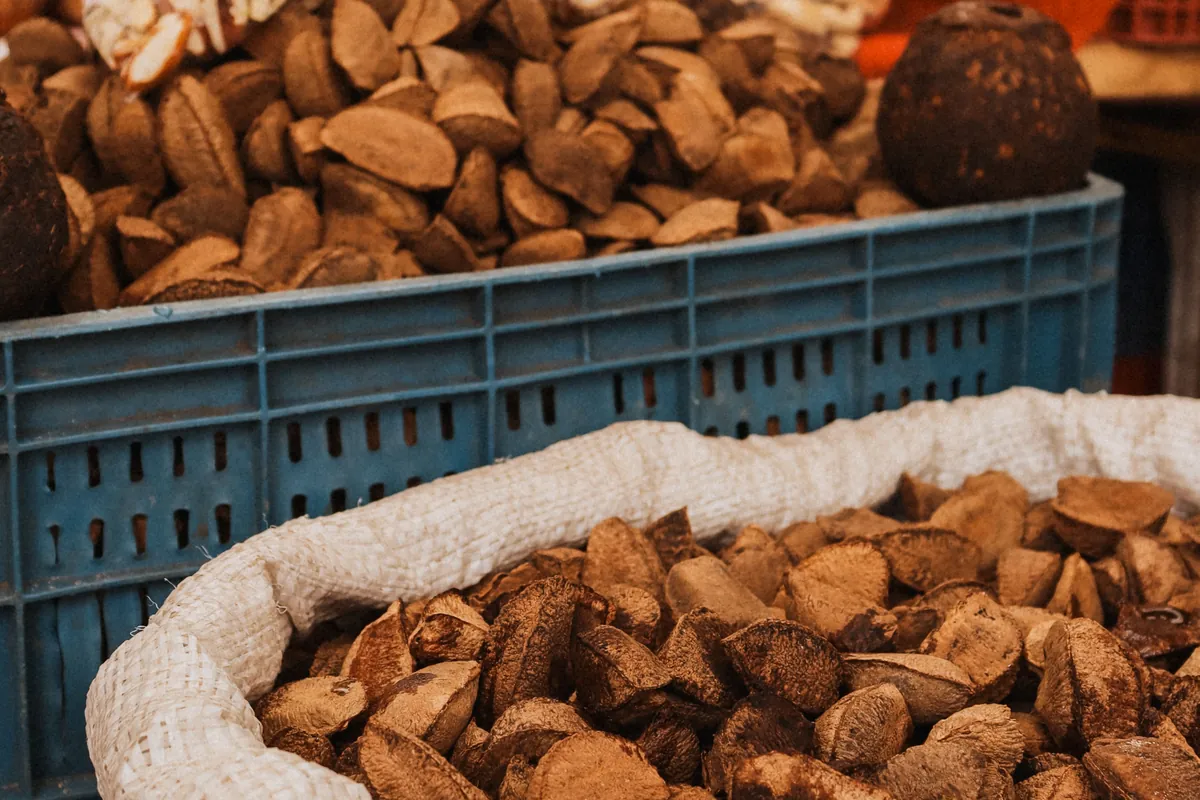
Brazil nuts in their shells piled in a crate and a sack at a market stall
Photo: Raíssa Lisboa on Pexels (Pexels License)
01 What it does

What selenium does for you.

Thyroid hormones

Selenoproteins help convert the prohormone T4 into active T3 and help protect the thyroid gland during hormone production1.

Cell protection

Glutathione peroxidases and other selenoproteins help protect cells from oxidative damage and infection1.

DNA synthesis

Selenoproteins play a role in making DNA1.

Reproduction

Needed for reproduction, and an important nutrient for healthy sperm2.

25 selenoproteins

Selenium is part of 25 human selenoproteins, including thioredoxin reductases, glutathione peroxidases and selenoprotein P1.

02 How your body uses it

How your body uses selenium.

How your body uses selenium: Food selenium → Small intestine → Liver → Selenoprotein P → Tissues → Kidneys. Soil selenium sets plant levels Food selenium.01Food seleniumMostly selenomethionine02Small intestineReadily absorbed03LiverCentral hub of selenium use04Selenoprotein PCarries it in the blood05TissuesSelenoproteins at work06KidneysExcess leaves in urineSoil seleniumVaries by regionsets plant levelsHow your body uses selenium: Food selenium → Small intestine → Liver → Selenoprotein P → Tissues → Kidneys. Soil selenium sets plant levels Food selenium.01Food seleniumMostly selenomethionineSoil seleniumVaries byregion02Small intestineReadily absorbed03LiverCentral hub of seleniumuse04Selenoprotein PCarries it in the blood05TissuesSelenoproteins at work06KidneysExcess leaves in urine

Food selenium, mostly selenomethionine with selenocysteine, is readily absorbed and turned into a common intermediate used to make the selenocysteine in selenoproteins; urinary excretion keeps the balance1. The liver makes selenoprotein P, which carries selenium in the blood to tissues such as the brain and testis3.

03 Where to get it

Foods and other sources.

Brazil nutsTunaSardinesShrimpPorkBeefTurkeyChickenEggsCottage cheeseBrown riceWhole-wheat bread

Vegetarian

Food and servingAmount
Brazil nuts, 1 ounce (6–8 nuts)544 µg
Spaghetti, cooked, 1 cup33 µg
Cottage cheese, 1% milkfat, 1 cup20 µg
Baked beans, canned, 1 cup13 µg
Oatmeal, cooked with water, 1 cup13 µg
Mushrooms, portabella, grilled, ½ cup13 µg
Rice, brown, long-grain, cooked, 1 cup12 µg
Bread, whole-wheat, 1 slice8 µg

Non-vegetarian

Food and servingAmount
Tuna, yellowfin, cooked, 3 oz92 µg
Sardines, canned in oil, with bone, 3 oz45 µg
Shrimp, cooked, 3 oz42 µg
Pork chop, bone-in, broiled, 3 oz37 µg
Beef steak, bottom round, roasted, 3 oz37 µg
Turkey, boneless, roasted, 3 oz26 µg
Chicken, light meat, roasted, 3 oz22 µg
Egg, hard-boiled, 1 large15 µg

Selenium in plant foods varies widely with the soil they grew in, and Brazil nut values vary widely between analyses; animal foods vary less because animals keep steady tissue levels1. Amounts per serving from1.

The soil

Plants take up selenium from soil, so plant foods grown in low-selenium regions hold less; food shipped from many regions evens this out1.

Drinking water

The selenium in drinking water is not nutritionally significant in most regions1.

Supplements

Found in multivitamin/mineral products, in combinations with vitamin E and on its own; selenium-only products usually hold the most1.

04 How much you need

Your daily reference amounts.

The same reference table draws the reference lines on your charts in Ayuvo. Needs differ in pregnancy and breastfeeding, which are not covered here.

Selenium: daily RDA by age and sex
AgeWomenMenUpper limit
19–3055 mcg55 mcg400 mcg
31–5055 mcg55 mcg400 mcg
51–7055 mcg55 mcg400 mcg
71+55 mcg55 mcg400 mcg

RDA (Recommended Dietary Allowance) is the daily amount that meets the needs of nearly all healthy people. Per day, for adults1.

Upper limit (UL) is the most per day that is unlikely to cause harm. Applies to food, drinks and supplements combined.

  • In 2023 the European Food Safety Authority set a lower upper limit of 255 mcg a day for adults.
Selenium reference amounts for adults aged 31–50: RDA 55 mcg; Upper limit 400 mcgRDA 55 mcgUpper limit 400 mcg0Adults 31–50, per day
Below the recommended amountRecommended rangeAbove the upper limit
05 Balance

Too little, too much.

Signs like these have many possible causes. They are a reason to talk to a clinician, not to self-treat.

Too little

Deficiency is very rare in the U.S. and Canada and rarely causes illness on its own, but in low-selenium regions it is linked with some diseases1.

  • Keshan disease, a heart muscle disease
  • Kashin-Beck disease, a type of arthritis
  • Can make iodine deficiency worse
  • Higher risk with long-term kidney dialysis
  • Higher risk when living with HIV

Too much

Chronically high intakes cause selenosis; Brazil nuts hold so much selenium that eating them regularly could cause toxicity1.

  • Garlic odour on the breath
  • Metallic taste in the mouth
  • Hair loss
  • Brittle nails or nail loss
  • Skin rash
  • Nausea and diarrhea
  • Fatigue and irritability
06 Blood test

Plasma or serum selenium.

Plasma and serum selenium are the most common measures and reflect recent intake; whole blood, hair and nails reflect longer-term intake, and selenoprotein markers can be affected by inflammation1.

Plasma or serum seleniumWhat it may mean
≥ 8 µg/dLUsually considered sufficient in healthy people

Labs use different units and ranges. Your clinician reads a result alongside your history and other tests.

07 Supplements

Supplement forms.

Selenium supplements come in several forms, and the body absorbs up to about 90% of the selenium from each of the common ones1.

Selenomethionine

The main form of selenium in food, also widely used in supplements1.

Selenium-enriched yeast

Yeast grown in a high-selenium medium; its selenium is mostly selenomethionine1.

Sodium selenite

An inorganic form found in supplements1.

Sodium selenate

Another inorganic form found in supplements1.

Supplements can interact with medicines. Talk to a clinician or pharmacist before you start one, especially at high doses.

08 Key points

Remember these five.

  1. Selenium is part of 25 selenoproteins that support the thyroid, DNA synthesis and cell protection.
  2. Seafood, meat, poultry, eggs and grains are common sources; plant levels depend on the soil.
  3. A single Brazil nut can hold roughly 68 to 91 µg of selenium, so a few go a long way.
  4. Most people in the U.S. get enough selenium from the foods they eat.
  5. In large trials, selenium supplements did not lower the risk of cancer or cardiovascular disease.
FAQ

Questions about selenium.

Can you eat too many Brazil nuts?

Yes. One Brazil nut can hold about 68 to 91 micrograms of selenium, and amounts vary with where the nuts were grown. Eating them regularly and in large numbers can push total selenium above the upper limit shown on this page, and chronically high intakes can cause hair loss and brittle nails.

Do selenium supplements prevent cancer?

Some observational studies linked higher selenium status with a lower risk of several cancers, but large randomized trials found that selenium supplements did not reduce the risk of prostate cancer or cancer overall. One analysis of a large trial linked selenium supplements with a higher risk of high-grade prostate cancer in men who already had higher selenium status.

Is selenium deficiency common?

No. Deficiency is very rare in the U.S. and Canada, partly because food comes from many regions. The risk is higher for people on long-term kidney dialysis, people living with HIV, and people whose diet is mostly plant foods grown locally in low-selenium soil.

Get started

Track selenium in Ayuvo.

Food logging does not estimate selenium, so Ayuvo tracks it from supplements you log in Medications, and from Apple Health on iPhone or Health Connect on Android when another app saves it there. Charts by day, week, month and year use the reference lines from this page, personalised by age and sex where they differ. Free, with no account.

Coming soon to the App StoreComing soon to Google Play

Or read the code: Ayuvo is open source

Sources

Facts on this page come from these sources, checked on the dates shown. Intake numbers come from Ayuvo's shared reference table, which cites the sources marked for them.

  1. Selenium: Fact Sheet for Health Professionals · NIH Office of Dietary Supplements checked 2026-09-27
  2. Selenium: Fact Sheet for Consumers · NIH Office of Dietary Supplements checked 2026-09-27
  3. Selenium Transport Mechanism via Selenoprotein P: Its Physiological Role and Related Diseases (Saito Y. Frontiers in Nutrition, 2021) · PubMed Central checked 2026-09-27

General information, not medical advice. This guide is for healthy adults and does not cover pregnancy, breastfeeding, children or medical conditions. It cannot diagnose or treat anything. Talk to a clinician before starting high-dose supplements, or if you think you may have too little or too much of a nutrient. Spotted an error? Email us.