1. Home
  2. Nutrients
  3. Iron
Essential mineral

Iron, the oxygen carrier

Iron is a mineral your body uses to make haemoglobin, the protein in red blood cells that carries oxygen from the lungs to the tissues1.

MineralsTracked in mgDaily target4 sources · checked 2026-09-27

How much you need

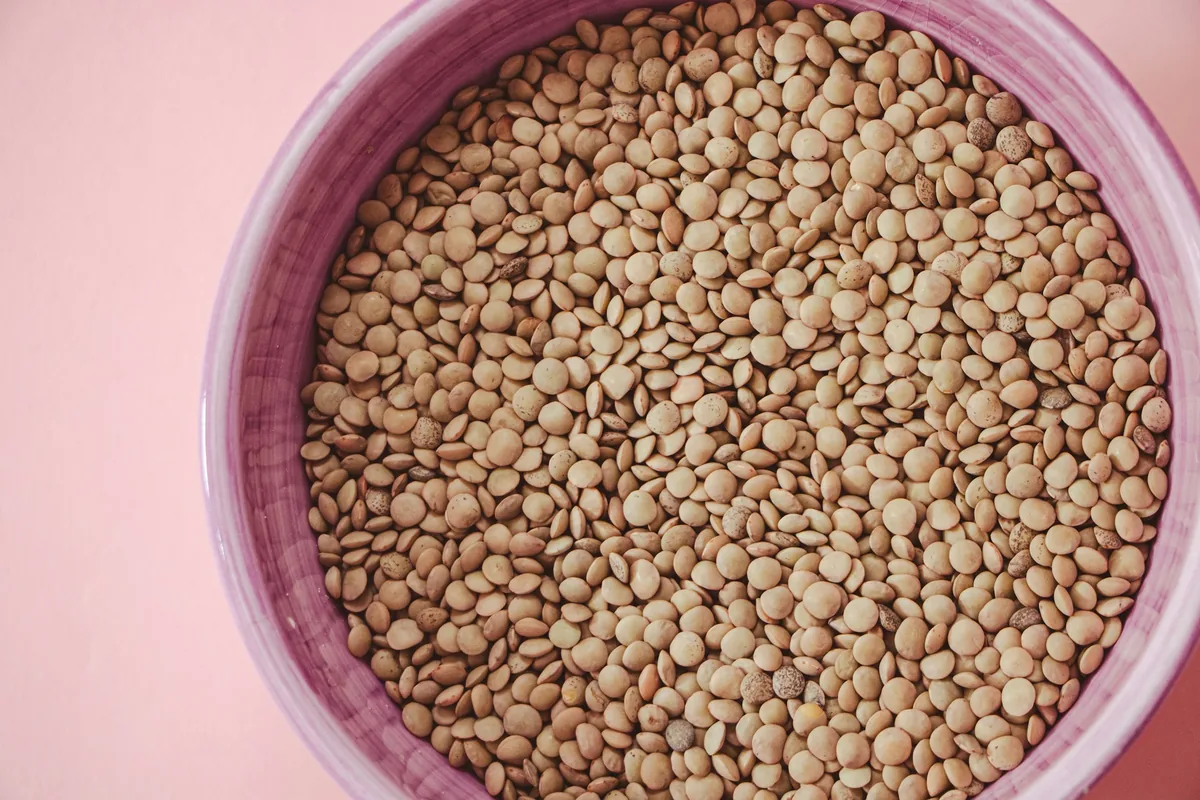
Overhead view of dry brown lentils filling a purple ceramic bowl on a pink surface
Photo: César Hernández on Unsplash (Unsplash License)
01 What it does

What iron does for you.

Carries oxygen

Iron is part of haemoglobin, which moves oxygen from the lungs to the tissues1.

Fuels muscles

As part of myoglobin, iron supplies oxygen that supports muscle metabolism1.

Growth and development

Iron is needed for physical growth and neurological development1.

Cells and hormones

Iron supports normal cell functioning and the making of some hormones1.

02 How your body uses it

How your body uses iron.

How your body uses iron: Food iron → Stomach acid → Duodenum → Transferrin → Bone marrow → Haemoglobin → Body tissues. Hepcidin curbs when iron high Duodenum.01Food ironHeme and non-heme02Stomach acidHelps non-heme uptake03DuodenumFe³⁺ → Fe²⁺, absorbed04TransferrinCarries iron in blood05Bone marrowBuilds red blood cells06HaemoglobinInside red blood cells07Body tissuesReceive oxygenHepcidinHormone made by the livercurbs when iron highHow your body uses iron: Food iron → Stomach acid → Duodenum → Transferrin → Bone marrow → Haemoglobin → Body tissues. Hepcidin curbs when iron high Duodenum.01Food ironHeme and non-heme02Stomach acidHelps non-heme uptake03DuodenumFe³⁺ → Fe²⁺, absorbedHepcidinHormone madeby the liver04TransferrinCarries iron in blood05Bone marrowBuilds red blood cells06HaemoglobinInside red blood cells07Body tissuesReceive oxygen

In the duodenum, non-heme iron is changed from ferric to ferrous form and absorbed, then transferrin carries it to the bone marrow for making red cells2. Hepcidin from the liver limits absorption when iron is high and falls when iron is low2.

03 Where to get it

Foods and other sources.

LentilsWhite beansTofuSpinachChickpeasOystersBeefSardinesFortified cereal

Vegetarian

Food and servingAmount
White beans, canned, 1 cup8 mg
Lentils, boiled, ½ cup3 mg
Spinach, boiled, ½ cup3 mg
Tofu, firm, ½ cup3 mg
Chickpeas, boiled, ½ cup2 mg
Dark chocolate (45–69% cacao), 1 oz2 mg

Non-vegetarian

Food and servingAmount
Oysters, cooked, 3 oz8 mg
Beef liver, pan fried, 3 oz5 mg
Sardines, canned in oil, 3 oz2 mg
Beef, braised bottom round, 3 oz2 mg

Plant (non-heme) iron is absorbed less well, and eating it with vitamin C foods such as citrus, tomatoes or potatoes can help3. Amounts per serving from1.

Fortified grains

Wheat and other flours are often fortified, so bread, cereal and grain products supply non-heme iron1.

Supplements

Iron comes in multivitamins and iron-only products; the label lists the amount of elemental iron1.

04 How much you need

Your daily reference amounts.

The same reference table draws the reference lines on your charts in Ayuvo. Needs differ in pregnancy and breastfeeding, which are not covered here.

Iron: daily RDA by age and sex
AgeWomenMenUpper limit
19–3018 mg8 mg45 mg
31–5018 mg8 mg45 mg
51–708 mg8 mg45 mg
71+8 mg8 mg45 mg

RDA (Recommended Dietary Allowance) is the daily amount that meets the needs of nearly all healthy people. Per day, for adults1.

Upper limit (UL) is the most per day that is unlikely to cause harm. Applies to food, drinks and supplements combined.

  • People who eat a vegetarian diet need about 1.8 times more iron.
Iron reference amounts for adults aged 31–50: Women 18 · Men 8 mg; Upper limit 45 mgWomen 18 · Men 8 mgUpper limit 45 mg0Adults 31–50, per day
Below the recommended amountRecommended rangeAbove the upper limit
05 Balance

Too little, too much.

Signs like these have many possible causes. They are a reason to talk to a clinician, not to self-treat.

Too little

When iron stores run out, haemoglobin falls and iron-deficiency anaemia can develop1.

  • Tiredness and weakness
  • Trouble concentrating
  • Shortness of breath on exertion
  • Dizziness or light-headedness
  • Stomach and gut upset
  • Pale tongue, spoon-shaped nails

Too much

Iron overload from food is unlikely with normal gut function, but high-dose supplements can cause side effects1.

  • Stomach upset and nausea
  • Constipation
  • Vomiting or diarrhoea
  • Lower zinc absorption
  • Poisoning risk for young children
  • Build-up with haemochromatosis
06 Blood test

Serum ferritin.

Serum ferritin reflects iron stores and drops early in iron depletion; inflammation can raise it, so haemoglobin and transferrin saturation are often checked too1.

FerritinWhat it may mean
Below 30 µg/LSuggests iron deficiency
Below 10 µg/LSuggests iron-deficiency anaemia

Labs use different units and ranges. Your clinician reads a result alongside your history and other tests.

07 Supplements

Supplement forms.

Iron supplements mostly use ferrous or ferric salts, and ferrous forms are absorbed better than ferric ones1.

Ferrous sulfate

A common form that is about 20% elemental iron by weight1.

Ferrous fumarate

About 33% elemental iron by weight1.

Ferrous gluconate

About 12% elemental iron by weight1.

Ferric citrate or sulfate

Ferric forms are less soluble, so they are less bioavailable than ferrous iron1.

Chelates and carbonyl iron

These and heme iron polypeptides might cause fewer stomach side effects than iron salts1.

Supplements can interact with medicines. Talk to a clinician or pharmacist before you start one, especially at high doses.

08 Key points

Remember these five.

  1. Heme iron from meat and seafood is absorbed more easily than non-heme iron from plants.
  2. Eating vitamin C foods with beans, lentils or greens helps your body take in plant iron.
  3. Ferritin shows iron stores, but infection or inflammation can push it up.
  4. Iron supplements can upset the stomach; keep them well out of children's reach.
  5. Calcium and iron supplements are often taken at different times of day.
FAQ

Questions about iron.

What is the difference between heme and non-heme iron?

Heme iron is found in meat, poultry and seafood and is absorbed more easily. Non-heme iron comes from plants, beans and fortified grains, and how much you absorb depends more on what you eat with it, such as vitamin C.

Do vegetarians need more iron?

Yes. Because plant iron is absorbed less well, intake recommendations for people on vegetarian diets are higher than for people who eat meat. Pairing plant iron with vitamin C foods can help.

Can a blood test show low iron before anaemia?

Often, yes. Serum ferritin falls in the first stage of iron depletion, so it can show low stores before haemoglobin drops. Inflammation can raise ferritin, so it is usually read alongside other results.

Get started

Track iron in Ayuvo.

Ayuvo charts iron by day, week, month and year, with the reference lines from this page, personalised by age and sex where they differ. Supplements you log in Medications count too. Free, with no account.

Coming soon to the App StoreComing soon to Google Play

Or read the code: Ayuvo is open source

Sources

Facts on this page come from these sources, checked on the dates shown. Intake numbers come from Ayuvo's shared reference table, which cites the sources marked for them.

  1. Iron: Fact Sheet for Health Professionals · NIH Office of Dietary Supplements checked 2026-09-27
  2. Iron metabolism and iron disorders revisited in the hepcidin era (Camaschella, Nai & Silvestri, Haematologica, 2020) · PubMed Central (PMC) checked 2026-09-27
  3. Iron in diet · MedlinePlus, U.S. National Library of Medicine checked 2026-09-27
  4. Anaemia fact sheet · World Health Organization checked 2026-09-27

General information, not medical advice. This guide is for healthy adults and does not cover pregnancy, breastfeeding, children or medical conditions. It cannot diagnose or treat anything. Talk to a clinician before starting high-dose supplements, or if you think you may have too little or too much of a nutrient. Spotted an error? Email us.