Is manganese the same as magnesium?
No. They are different minerals with similar names. Manganese is a trace mineral that enzymes need in small amounts, while magnesium is needed in much larger amounts and has its own guide.
Manganese is an essential trace mineral that enzymes such as manganese superoxide dismutase need for metabolism, bone formation and protecting cells from damage1.
Enzymes that use manganese help process amino acids, cholesterol, glucose and carbohydrates1.
Manganese superoxide dismutase helps clear reactive oxygen species that can damage cells1.
Manganese is a cofactor for several enzymes involved in bone formation1.
Works with vitamin K in blood clotting and hemostasis1.
Also involved in reproduction and the immune response1.
Adults absorb only about 1–5% of dietary manganese, more when intake is low; once absorbed, most is bound to transferrin, albumin and alpha-2-macroglobulin and taken up by the liver and other tissues1. More than 90% of absorbed manganese leaves in bile, which keeps tissue levels steady1.
| Food and serving | Amount |
|---|---|
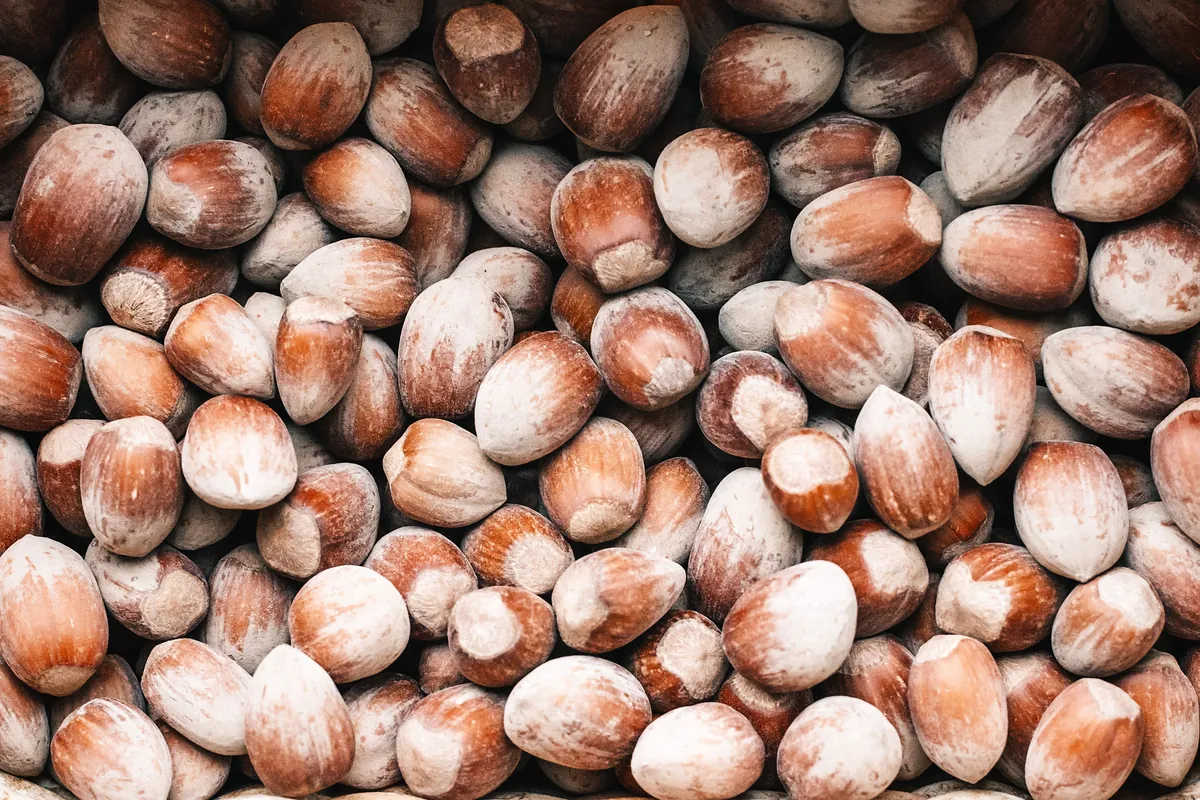
| Hazelnuts, dry roasted, 1 oz | 1.6 mg |
| Pecans, dry roasted, 1 oz | 1.1 mg |
| Brown rice, medium grain, cooked, ½ cup | 1.1 mg |
| Chickpeas, cooked, ½ cup | 0.9 mg |
| Spinach, boiled, ½ cup | 0.8 mg |
| Pineapple, raw chunks, ½ cup | 0.8 mg |
| Bread, whole wheat, 1 slice | 0.7 mg |
| Oatmeal, cooked, ½ cup | 0.7 mg |
| Tea, black, brewed, 1 cup | 0.5 mg |
| Food and serving | Amount |
|---|---|
| Mussels, blue, cooked, 3 oz | 5.8 mg |
| Oysters, Pacific, cooked, 3 oz | 1.0 mg |
| Clams, cooked, 3 oz | 0.9 mg |
Meat, poultry, eggs and dairy provide little or no manganese, and grain products, tea and vegetables are the top sources for U.S. adults1. Amounts per serving from1.
The same reference table draws the reference lines on your charts in Ayuvo. Needs differ in pregnancy and breastfeeding, which are not covered here.
| Age | Women | Men | Upper limit |
|---|---|---|---|
| 19–30 | 1.8 mg | 2.3 mg | 11 mg |
| 31–50 | 1.8 mg | 2.3 mg | 11 mg |
| 51–70 | 1.8 mg | 2.3 mg | 11 mg |
| 71+ | 1.8 mg | 2.3 mg | 11 mg |
AI (Adequate Intake) is used when there is not enough evidence for an RDA: an amount assumed to be enough. Per day, for adults1.
Upper limit (UL) is the most per day that is unlikely to cause harm. Applies to food, drinks and supplements combined.
Signs like these have many possible causes. They are a reason to talk to a clinician, not to self-treat.
Manganese deficiency is very rare and its signs are not firmly established; very limited evidence links it with these1.
No harm has been shown from manganese in food, but toxicity has occurred from inhaling manganese dust at work and from drinking water with very high levels1.
Supplement labels list elemental manganese, and no data are available on how well the different forms are absorbed1.
Such as manganese bisglycinate, manganese glycinate and manganese aspartate1.
A common form; no form is known to be better than any other2.
Other forms found in supplements, along with manganese chloride1.
Supplements can interact with medicines. Talk to a clinician or pharmacist before you start one, especially at high doses.
No. They are different minerals with similar names. Manganese is a trace mineral that enzymes need in small amounts, while magnesium is needed in much larger amounts and has its own guide.
People with chronic liver disease clear manganese through bile less well, and iron deficiency increases manganese absorption, so both can make excess manganese more likely to cause problems. Breathing manganese dust at work, as in welding and mining, is another known risk.
Yes. A cup of brewed black tea provides about 0.5 mg of manganese, and tea is one of the top sources of manganese for U.S. adults, along with grain products and vegetables.
Food logging does not estimate manganese, so Ayuvo tracks it from supplements you log in Medications, and from Apple Health on iPhone or Health Connect on Android when another app saves it there. Charts by day, week, month and year use the reference lines from this page, personalised by age and sex where they differ. Free, with no account.
Or read the code: Ayuvo is open source
Facts on this page come from these sources, checked on the dates shown. Intake numbers come from Ayuvo's shared reference table, which cites the sources marked for them.
General information, not medical advice. This guide is for healthy adults and does not cover pregnancy, breastfeeding, children or medical conditions. It cannot diagnose or treat anything. Talk to a clinician before starting high-dose supplements, or if you think you may have too little or too much of a nutrient. Spotted an error? Email us.