1. Home
  2. Nutrients
  3. Trans fat
Fat to avoid

Trans fat, the fat to skip

Trans fat raises LDL (bad) cholesterol and lowers HDL (good) cholesterol, which increases the risk of heart disease and stroke4.

FatsTracked in gFor information10 sources · checked 2026-09-27

How much you need

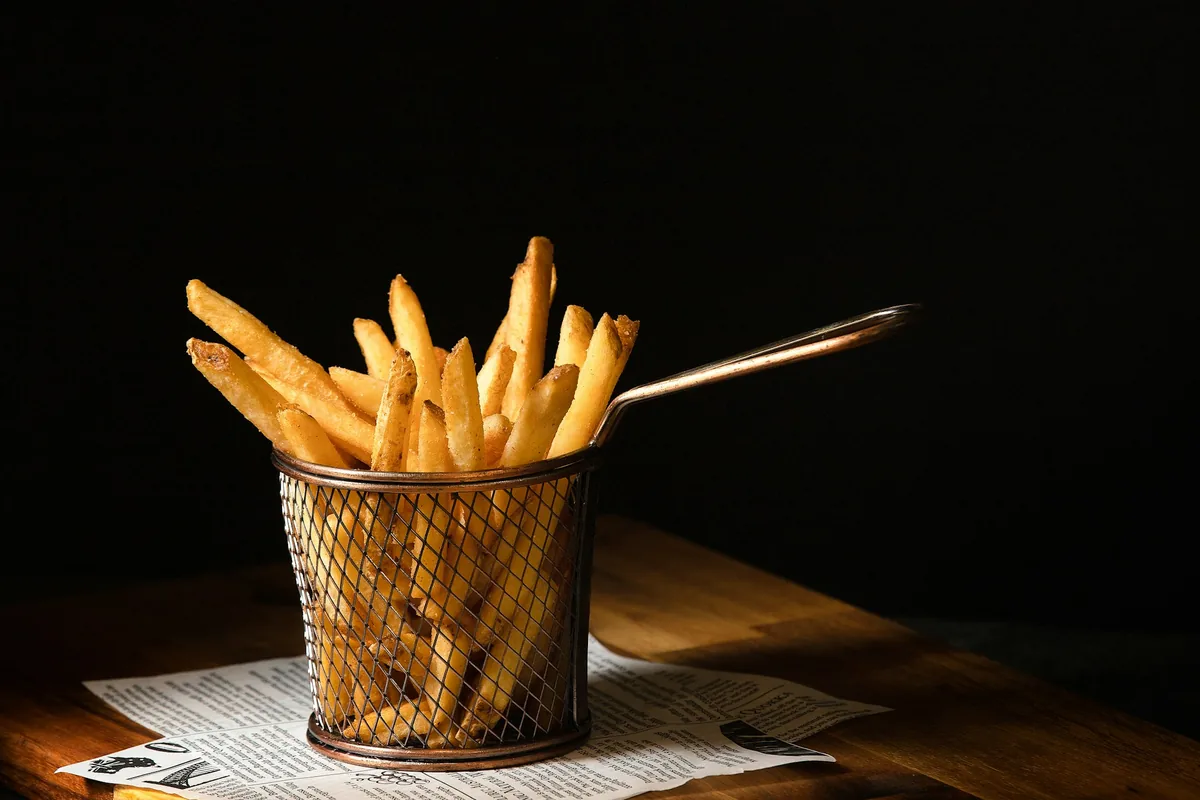
Golden French fries in a small wire fry basket on a wooden board against a dark background
Photo: Mitchell Luo on Unsplash (Unsplash License)
01 What it does

What trans fat does for you.

Raises LDL

Eating trans fat raises LDL ("bad") cholesterol in the blood1.

Lowers HDL

Trans fats also lower HDL ("good") cholesterol4.

Builds artery plaque

High LDL with low HDL can let cholesterol build up in arteries4.

Dense in calories

Like all fats, trans fat has 9 calories per gram4.

Not needed by the body

Your body does not need or benefit from trans fat4.

02 How your body uses it

How trans fat affects your body.

How trans fat affects your body: Trans fats → Small intestine → Chylomicrons → Bloodstream → Cholesterol shift → Arteries01Trans fatsPHOs or ruminant fat02Small intestineDigested & absorbed03ChylomicronsPackaged with other fats04BloodstreamCarried in lipoproteins05Cholesterol shift↑ LDL, ↓ HDL06ArteriesPlaque can build upHow trans fat affects your body: Trans fats → Small intestine → Chylomicrons → Bloodstream → Cholesterol shift → Arteries01Trans fatsPHOs or ruminant fat02Small intestineDigested & absorbed03ChylomicronsPackaged with other fats04BloodstreamCarried in lipoproteins05Cholesterol shift↑ LDL, ↓ HDL06ArteriesPlaque can build up

Dietary fats are digested and absorbed in the small intestine, then packaged into chylomicrons that enter the circulation6. All trans fats raise the LDL-to-HDL ratio, and high LDL with low HDL can lead to cholesterol build-up in arteries54.

03 Where to get it

Foods and other sources.

Fried foodsStick margarineShorteningPastriesCookiesFrozen pizzaNondairy creamerButterBeef

Vegetarian

Food and servingAmount
Fried and battered foods—
Shortening and stick margarine—
Store-bought cakes, pies, cookies—
Refrigerated dough—
Frozen pizza and frozen dinners—
Nondairy creamer—
Dairy foods (small natural amounts)—

Non-vegetarian

Food and servingAmount
Red meat (small natural amounts)—

Look for "partially hydrogenated" in the ingredients, since a label can show 0 g trans fat even when a small amount is present per serving4. Amounts per serving from4.

Natural trans fat

Cattle and sheep make small amounts in the rumen, so milk, butter, cheese and meat contain some18.

U.S. PHO phase-out

In 2015, PHOs were found no longer generally recognized as safe; the final compliance date was January 1, 20211.

WHO REPLACE

Launched in 2018, REPLACE aims to eliminate industrially produced trans fat from the global food supply3.

04 How much you need

Your daily reference amounts.

The same reference table draws the reference lines on your charts in Ayuvo. Needs differ in pregnancy and breastfeeding, which are not covered here.

No daily numberNo recommended amount or upper limit is set for trans fat910, so Ayuvo charts your intake without a reference line.
  • Keep as low as possible while eating a nutritionally adequate diet; no numeric limit is set.
05 Balance

Too little, too much.

Signs like these have many possible causes. They are a reason to talk to a clinician, not to self-treat.

Too much

Industrially produced trans fat is linked with more heart disease deaths, as it raises LDL, lowers HDL and promotes artery build-up24.

  • Higher LDL cholesterol
  • Lower HDL cholesterol
  • Plaque in the arteries
  • Higher heart disease risk
  • Higher stroke risk
06 Blood test

Lipid panel.

A cholesterol test measures LDL, HDL, total cholesterol and triglycerides; too much LDL can build plaque in the arteries7.

Labs use different units and ranges. Your clinician reads a result alongside your history and other tests.

07 Key points

Remember these five.

  1. Trans fat raises LDL and lowers HDL, a pairing linked with heart disease and stroke.
  2. Most trans fat of concern came from partially hydrogenated oils (PHOs).
  3. PHOs are no longer added to U.S. foods, but check older or imported products.
  4. Dairy and meat contain small natural amounts; these are less of a concern.
  5. Choose oils like olive, canola or safflower over shortening and stick margarine.
FAQ

Questions about trans fat.

Is trans fat banned in the United States?

Partially hydrogenated oils, the main source of artificial trans fat, were found in 2015 to be no longer generally recognized as safe, with a final compliance date in 2021, so they're no longer added to foods. Small amounts of natural trans fat still occur in meat and dairy.

Are natural trans fats in milk and meat harmful?

Meat and dairy have small amounts of trans fat that health agencies say aren't a cause for concern in their natural form. Research suggests all trans fats raise the LDL-to-HDL ratio, though the effect of ruminant trans fat looked somewhat smaller than industrial trans fat.

How can I tell if a food has trans fat?

Check the Nutrition Facts label for trans fat and the ingredient list for "partially hydrogenated" oil. A serving can be listed as 0 g even if a small amount is present, so count how many servings you eat.

Get started

Track trans fat in Ayuvo.

Ayuvo charts trans fat by day, week, month and year, with the reference lines from this page, personalised by age and sex where they differ. Supplements you log in Medications count too. Free, with no account.

Coming soon to the App StoreComing soon to Google Play

Or read the code: Ayuvo is open source

Sources

Facts on this page come from these sources, checked on the dates shown. Intake numbers come from Ayuvo's shared reference table, which cites the sources marked for them.

  1. Trans Fat · U.S. Food and Drug Administration checked 2026-09-27
  2. Trans fat (fact sheet) · World Health Organization checked 2026-09-27
  3. REPLACE trans fat · World Health Organization checked 2026-09-27
  4. Facts about trans fats · MedlinePlus (U.S. National Library of Medicine) checked 2026-09-27
  5. Effect of Animal and Industrial Trans Fatty Acids on HDL and LDL Cholesterol Levels in Humans – A Quantitative Review (Brouwer et al., PLoS One, 2010) · PubMed Central checked 2026-09-27
  6. Physiology, Nutrient Absorption (StatPearls) · NCBI Bookshelf, U.S. National Library of Medicine checked 2026-09-27
  7. Cholesterol Levels · MedlinePlus (U.S. National Library of Medicine) checked 2026-09-27
  8. Dietary Guidelines for Americans, 2020–2025 · U.S. Department of Agriculture & U.S. Department of Health and Human Services checked 2026-09-27
  9. Dietary Reference Intakes for Energy, Carbohydrate, Fiber, Fat, Fatty Acids, Cholesterol, Protein, and Amino Acids (2005) · National Academies of Sciences, Engineering, and Medicine checked 2026-09-27
  10. Dietary Reference Intakes tables: Reference values for macronutrients · Health Canada checked 2026-09-27

General information, not medical advice. This guide is for healthy adults and does not cover pregnancy, breastfeeding, children or medical conditions. It cannot diagnose or treat anything. Talk to a clinician before starting high-dose supplements, or if you think you may have too little or too much of a nutrient. Spotted an error? Email us.