1. Home
  2. Nutrients
  3. Sugar
Simple carbohydrate

Sugar, quick fuel

Sugars are simple carbohydrates found naturally in fruit and milk and added to many packaged foods; your body breaks them down to glucose for energy3.

Carbs & sugarTracked in gFor information9 sources · checked 2026-09-27

How much you need

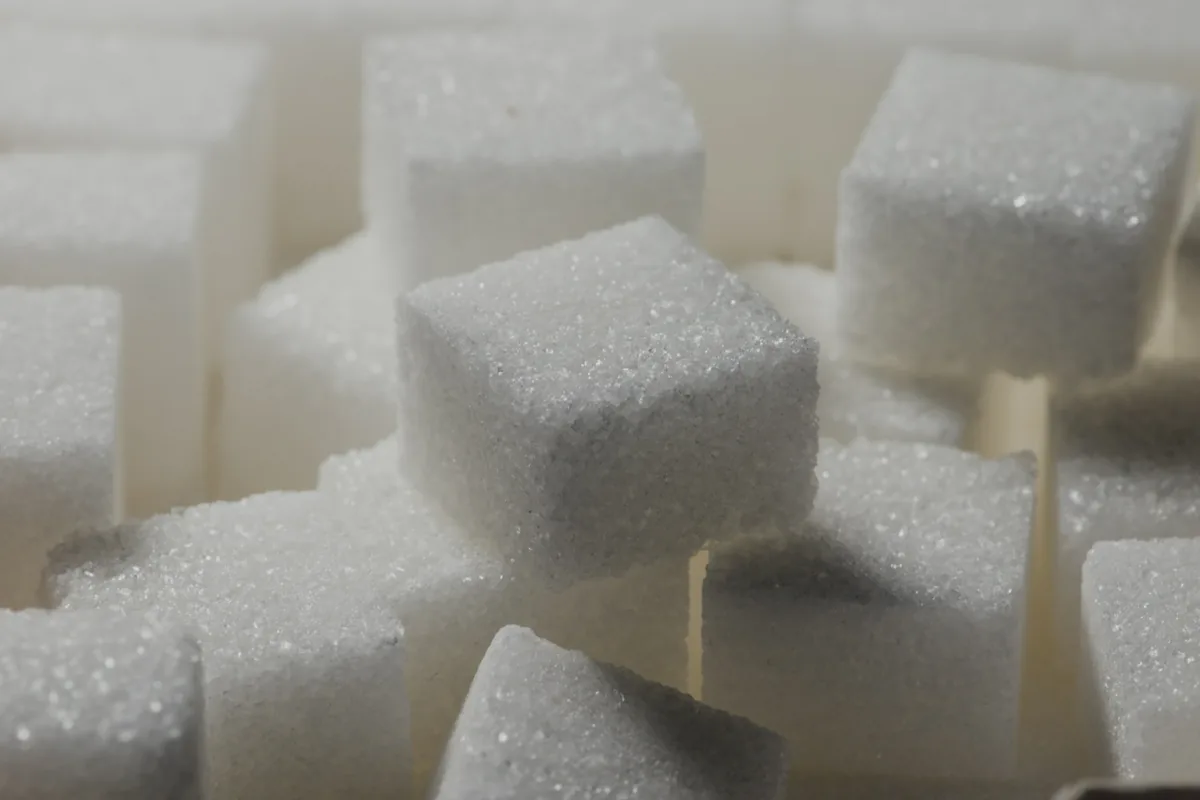
Close-up of a pile of white sugar cubes
Photo: Daniel Kraus on Unsplash (Unsplash License)
01 What it does

What sugar does for you.

Supplies energy

Sugars and most starches become glucose, which circulates in the blood to be used as energy3.

Raises blood sugar

Simple sugars are used quickly, causing a rapid rise in blood sugar and insulin release4.

Stored for later

Extra glucose is stored in the liver and muscle until more energy is needed4.

Adds calories

Sugar has four calories per gram, so 15 g of sugar adds 60 calories7.

02 How your body uses it

How your body uses sugar.

How your body uses sugar: Sugars & starches → Digestion → Small intestine → Blood glucose → Cells → Liver & muscle. Pancreas responds to rise Blood glucose.01Sugars & starchesFruit, milk, sweets02DigestionSplit into simple sugars03Small intestineGlucose, fructose absorbed04Blood glucoseRises after eating05CellsTake in glucose for energy06Liver & muscleStore the extraPancreasReleases insulinresponds to riseHow your body uses sugar: Sugars & starches → Digestion → Small intestine → Blood glucose → Cells → Liver & muscle. Pancreas responds to rise Blood glucose.01Sugars & starchesFruit, milk, sweets02DigestionSplit into simple sugars03Small intestineGlucose, fructose absorbed04Blood glucoseRises after eatingPancreasReleasesinsulin05CellsTake in glucose for energy06Liver & muscleStore the extra

Digestion breaks carbohydrates into glucose, fructose and galactose, which are absorbed in the small intestine5. Rising blood sugar prompts the pancreas to release insulin, which signals cells to take up glucose for energy or storage4.

03 Where to get it

Foods and other sources.

FruitMilkYogurtHoneyTable sugarFruit juiceSoft drinksSweets

Foods

Food and servingAmount
Apple, 1 large25 g
Grapes, ¾ cup20 g
Watermelon, 2 cups20 g
Banana, 1 medium19 g
Pear, 1 medium16 g
Sweet cherries, 1 cup16 g
Orange, 1 medium14 g
Pineapple, 2 slices10 g
Strawberries, 8 medium8 g

Sugars that occur naturally in fruit and milk count toward Total Sugars but not toward Added Sugars2. Amounts per serving from6.

Label: Total Sugars

Includes sugars naturally in milk and fruit plus any added sugars; no Daily Value is set for it1.

Label: Added Sugars

The "Includes Added Sugars" line shows sugars added in processing or from syrups, honey and juice concentrates2.

Natural sugar types

Fruit contains fructose and glucose, and milk contains lactose7.

04 How much you need

Your daily reference amounts.

The same reference table draws the reference lines on your charts in Ayuvo. Needs differ in pregnancy and breastfeeding, which are not covered here.

No daily numberNo recommended amount or upper limit is set for sugar9, so Ayuvo charts your intake without a reference line.
  • No authoritative daily amount exists for total sugars; the limit applies to added sugars.
05 Balance

Too little, too much.

Signs like these have many possible causes. They are a reason to talk to a clinician, not to self-treat.

Too much

Eating large amounts of sugary foods is linked with plaque, tooth decay and cavities4, and added sugars can bring calories that lead to overweight7.

  • Tooth decay and cavities
  • Extra calories
  • Weight gain over time
  • Fast rises in blood sugar
06 Blood test

Blood glucose & HbA1c.

A blood glucose test measures glucose in your blood, and HbA1c reflects your average blood glucose over the past 3 months; both track blood sugar, not intake8.

Labs use different units and ranges. Your clinician reads a result alongside your history and other tests.

07 Key points

Remember these five.

  1. No reference amount exists for Total Sugars; guidance focuses on added sugars.
  2. Fruit and milk sugars come packaged with other nutrients; added sugars often don't.
  3. On the label, "Includes Added Sugars" is the part added during processing.
  4. Your body turns sugars into glucose for energy and stores the extra in liver and muscle.
  5. Blood glucose and HbA1c tests measure blood sugar, not sugar intake.
FAQ

Questions about sugar.

What is the difference between Total Sugars and Added Sugars?

Total Sugars on the Nutrition Facts label includes sugars naturally in foods like milk and fruit plus any added sugars. Added Sugars covers only sugars added during processing, packaged sweeteners, syrups, honey and concentrated fruit or vegetable juices.

Why is there no Daily Value for total sugars?

No recommendation has been made for the total amount of sugar to eat in a day, so no Daily Reference Value exists for Total Sugars. Guidance focuses on added sugars instead.

Is the sugar in fruit the same as added sugar?

Fruit naturally contains fructose and glucose, and milk contains lactose. These naturally occurring sugars aren't counted as added sugars, and they come in foods that also provide other nutrients.

Get started

Track sugar in Ayuvo.

Ayuvo charts sugar by day, week, month and year, with the reference lines from this page, personalised by age and sex where they differ. Supplements you log in Medications count too. Free, with no account.

Coming soon to the App StoreComing soon to Google Play

Or read the code: Ayuvo is open source

Sources

Facts on this page come from these sources, checked on the dates shown. Intake numbers come from Ayuvo's shared reference table, which cites the sources marked for them.

  1. How to Understand and Use the Nutrition Facts Label · U.S. Food and Drug Administration checked 2026-09-27
  2. Added Sugars on the Nutrition Facts Label · U.S. Food and Drug Administration checked 2026-09-27
  3. Carbohydrates · MedlinePlus (U.S. National Library of Medicine) checked 2026-09-27
  4. Physiology, Carbohydrates (StatPearls) · NCBI Bookshelf, U.S. National Library of Medicine checked 2026-09-27
  5. Physiology, Nutrient Absorption (StatPearls) · NCBI Bookshelf, U.S. National Library of Medicine checked 2026-09-27
  6. Raw Fruits Poster (Text Version / Accessible Version) · U.S. Food and Drug Administration checked 2026-09-27
  7. Added Sugars · American Heart Association checked 2026-09-27
  8. Blood Glucose Test · MedlinePlus (U.S. National Library of Medicine) checked 2026-09-27
  9. Dietary Guidelines for Americans, 2020-2025 · U.S. Department of Agriculture and U.S. Department of Health and Human Services checked 2026-09-27

General information, not medical advice. This guide is for healthy adults and does not cover pregnancy, breastfeeding, children or medical conditions. It cannot diagnose or treat anything. Talk to a clinician before starting high-dose supplements, or if you think you may have too little or too much of a nutrient. Spotted an error? Email us.